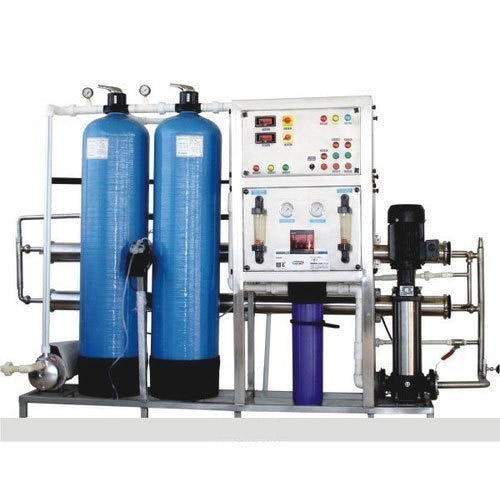
RO Water Treatment Plant
Compact commercial RO solution for packaged drinking-water production.
From 500 LPH to 2000 LPH RO water treatment and beyond, plan the complete packaged drinking-water line — pre-treatment, RO, UV, ozone, SS storage, PET blowing, bottle rinsing, filling, capping, labelling, coding, shrink packing, conveyors, chillers and jar plant sections.


Start with your available water source and suitable land. Our complete project approach brings the water-treatment, bottling, packaging and supporting systems together into one professionally planned production setup.
Share your available water source and basic water-quality information so the treatment process can be planned correctly.
Provide the available site or land area. The plant layout can then be planned around production, access and equipment placement.
We bring together RO treatment, post-treatment, storage, PET bottle production, filling, labelling, coding and packaging sections.
The objective is a coordinated end-to-end plant workflow from raw water intake through finished-product dispatch.
This website brings the treatment, bottling and packaging sections together so a buyer can understand what happens at every stage before requesting a project quotation.
Raw water is conditioned through storage and pre-treatment before RO purification. Post-RO treatment, hygienic storage and final filtration prepare the water for bottling.
Treated water moves through bottle rinsing, filling and capping, then into labelling, batch coding, shrink packing, pallet/carton handling and dispatch.
The following capacities are presented as planning options. Final membrane, pump, recovery, media and electrical specifications should be confirmed after raw-water analysis and the required output are known.
Scalable industrial RO systems for packaged drinking-water projects — select the treatment output that matches your production plan.
A typical packaged drinking-water line roughly follows this sequence. Exact plant architecture depends on raw-water quality, product specification and production target.
Source-water intake & testing.
Feed-water buffer.
Suspended solids removal.
Chlorine/organics reduction.
Fine pre-filtration.
Dissolved-solids reduction.
Post-RO disinfection.
Hygienic water buffer.
Final polishing.
Prepares bottles.
Measured bottle filling.
Sealed product pack.
Retail label application.
Production identification.
Grouped bottle packs.
Secondary handling.
Finished-goods staging.
Market distribution.
Treatment is designed as a chain. Pre-treatment reduces the load on the RO membrane; post-treatment and final filtration prepare treated water for the bottling stage.
Provides a controlled feed-water buffer and helps stabilise the treatment line.
Pressure media filtration for suspended solids and turbidity control.
Helps reduce chlorine, organics, taste and odour compounds.
Fine filtration before the RO membrane stage.
UV can be used as a non-chemical disinfection stage after RO.
The supplied equipment includes a 5 gram ozonator reference for the treatment process.
The supplied details include a 2000 LTR SS-304 tank reference for treated/process water.
Final polishing before the water reaches the bottle filler, where required.
The supplied machine details are used as the reference for the core equipment. Additional requested sections are included as complete plant components.

Combined bottle rinsing/washing, filling and capping section for the main bottling line.
Converts PET preforms into bottles before rinsing and filling.

Applies product labels consistently to finished bottles.

Adds batch and production information to bottles or packaging.

Creates grouped bottle packs for storage, handling and distribution.
Connects filling, labelling, coding and packing stations into a continuous line.
Beyond the main bottling line, selected projects may need process cooling, jar handling, storage and supporting utilities.
Process-water cooling where temperature control is required. Capacity is selected from the thermal load and process conditions.
Dedicated reusable-jar workflow covering jar washing, sanitising, filling, capping and transfer.

Stainless-steel tanks for raw, treated or process water, sized around the final plant flow and storage requirement.
A professional plant is not only a list of machines. Capacity matching, utilities, hygiene, space and product handling all affect the final configuration.
Raw-water test results, required treated-water quality, RO recovery, pre-treatment media, post-treatment, storage volume and final filtration are considered together.
Bottle size, bottles-per-minute target, PET blowing requirement, filler/capper configuration, label type, coding, shrink pack size, conveyor layout and finished-goods handling are matched.
Commercial-intent keywords are distributed naturally across the page rather than repeated unnaturally.
The supplied project images are used wherever available; technical illustrations cover the additional plant sections requested for the website.


The website presents 500 LPH, 500 LPH, 1000 LPH and 2000 LPH planning options. Final sizing depends on raw-water quality, required output, operating hours and the bottling line.
Raw Water → Raw Water Tank → Sand Filter → Activated Carbon Filter → Micron Filter → RO Plant → UV + Ozone Treatment → Treated Water Tank → Final Filtration → Bottle Rinsing → Water Filling → Capping → Labelling → Batch Coding → Shrink Packing → Carton/Pallet → Finished Product Store → Dispatch.
Post-water treatment can include UV, ozone, treated-water storage and final filtration after RO, depending on the intended water quality and process design.
Yes. PET bottle blowing can be planned upstream so produced bottles move into rinsing, filling and capping, with capacity matched to the required bottling output.
Yes. A separate reusable-jar section can be planned for jar washing, sanitising, filling, capping and transfer.
Raw-water quality affects pre-treatment, membrane selection, recovery, dosing, maintenance and the final water-treatment configuration. Final technical specifications should therefore be confirmed after water analysis.
Send your required LPH, bottle sizes, water source, jar requirement and project location. Get a discussion covering treatment, storage, PET blowing, bottling, packaging and dispatch.
Send Detailed RequirementPhone: +91 92979 38444
Address: B-24, Keshav Industrial Estate, Kathwada GIDC, Road No. 8, Gaon Road, Ahmedabad, Gujarat.
RO 500–12000 LPH • Pre-Treatment • Post Water Treatment • SS Storage • PET Blowing • Washing/Filling/Capping • Labelling • Batch Coding • Shrink Packing • Conveyor • Chiller • Jar Plant